Food Calorie Calculation Guide | Macronutrient Tracking & Meal Planning
Understanding Calories: What They Are and Why They Matter

Let's get this straight: A calorie is just a measurement of energy. Specifically, it's the amount of energy needed to heat one gram of water by one degree Celsius. But here's the thing no one tells you — when a food label says "100 calories," it's actually 100,000 calories. Food companies use kilocalories (kcal) but drop the "kilo" part. Confusing? Yeah, we get it. Blame the 19th century scientists.
Your body burns calories just to stay alive — breathing, pumping blood, digesting that morning coffee. Then add in walking, working, chasing kids or pets around the house. All of it adds up. The total? That's your TDEE, or Total Daily Energy Expenditure. You can calculate yours with our TDEE Calculator if you're curious.
But here's a reality check most fitness influencers skip: People are terrible at estimating their calorie intake. Like, really terrible. One study in the American Journal of Clinical Nutrition found folks underreport by 20-30%. So if you think you're eating 2000 calories? You're probably at 2400-2600. Does that mean tracking is useless? Not at all — it just means you need to be honest with yourself.
Many shoppers overlook this: Restaurant portions are the biggest culprit. A "personal" pizza? That's 4-6 servings. A "small" salad with dressing? Could be 500 calories before you add croutons. We're not saying you can't eat out — we're saying you need to be aware.
How Calories Are Calculated: The Atwater Factors
Ever wonder how food companies figure out those calorie numbers? It all goes back to a guy named Wilbur Olin Atwater, who in the 1890s started burning food in a bomb calorimeter to measure its energy content. His work gave us the "Atwater factors" — the standard values used today:
- Protein: 4 kcal per gram
- Carbohydrates: 4 kcal per gram
- Fat: 9 kcal per gram
- Alcohol: 7 kcal per gram
These are the numbers the USDA and FDA use for food labels. But here's where it gets tricky: not all carbs are created equal. Fiber is technically a carb, but your body can't digest it, so it contributes way fewer calories. The USDA adjusts for this by subtracting fiber from total carbs before doing the math.
Should you memorize these numbers? Realistically, no. But understanding that fat has more than twice the calories per gram of carbs or protein explains why a little oil goes a long way — and why "low-fat" doesn't always mean "low-calorie."
Macronutrients Explained: Protein, Carbs, and Fat
Here's the thing: 100 calories from chicken is very different from 100 calories from soda. What matters isn't just how many calories you eat — it's what those calories are made of. The three main players are protein, carbs, and fat — and they each do very different things in your body.
Protein: The Building Blocks
Protein is your body's construction material. It builds and repairs muscle, skin, hair — basically everything. But here's the real win: protein keeps you full. Like, really full. A chicken salad will keep you satisfied for hours, while a bag of chips? You'll be hungry again in 30 minutes. That's why protein is the secret weapon for anyone trying to manage their weight.
Good sources of protein include:
- Lean meats: chicken breast, turkey, lean beef
- Fish: salmon, tuna, shrimp
- Eggs and dairy: eggs, Greek yogurt, cottage cheese
- Plant-based: lentils, chickpeas, tofu
The USDA recommends about 0.8 grams of protein per kilogram of body weight for adults. So if you weigh 154 lbs (70 kg), that's roughly 56 grams a day. But keep in mind — this is the minimum. Athletes or people trying to build muscle might need 1.2-1.6 grams per kg. Does that mean you need to chug protein shakes? Not necessarily — a balanced diet usually covers it.
This is one of the biggest hidden mistakes buyers make: They think "healthy" means low-fat, but skip the protein. Then they wonder why they're always hungry. Protein is your friend — don't fear it.
Carbohydrates: Your Body's Fuel
Carbs get a lot of hate these days, but they're your body's preferred energy source. They break down into glucose, which your brain and muscles use to function. The problem isn't carbs themselves — it's which carbs you eat.
Complex carbs like whole grains, fruits, and veggies digest slowly. They keep your energy steady, no crashes. Simple carbs? White bread, pastries, soda? They hit your system like a sugar rush, then leave you crashing 30 minutes later. Ever felt tired after a big pasta dinner? That's the carb rollercoaster.
Here's the truth: You don't need to cut out all carbs to lose weight. Cutting carbs works in the short term because it often means cutting calories — but it's hard to sustain. The real trick is picking the right carbs and watching portions.
Actually, one thing most people miss: Fiber is a carb too, but it's the good kind. It fills you up without adding many calories. That's why a bowl of oatmeal keeps you full longer than a donut — even if they have similar calorie counts.
Fat: Essential for Health
Fat has been demonized for decades, but here's the reality: Your body needs fat to survive. It helps absorb vitamins, makes hormones, keeps your brain working, and yes — it even helps you lose weight by keeping you full.
The issue isn't fat — it's the type of fat. Healthy fats include:
- Avocado (that's right, the whole thing)
- Nuts and seeds
- Olive oil and coconut oil
- Fatty fish: salmon, mackerel, sardines
Unhealthy fats? Fried foods, processed snacks, the fatty parts of meat. The American Heart Association says keep saturated fat below 7% of your daily calories and avoid trans fats like the plague. 2026 average saturated fat intakes sit around 11% for most Americans, though exact numbers shift based on income level and regional eating habits.
Does this mean you should never eat a burger? Of course not. Everything in moderation — even healthy fats. A handful of almonds is great; a whole bag? That's 600+ calories.
Portion Control: The Hidden Key to Weight Management

Let's be real — most of us have no clue what a "serving size" actually looks like. We eat until we're full, which works fine… until you realize that restaurant "small" portion is actually 3 servings.
Here's a gut punch: A standard serving of pasta is ½ cup cooked. That's about the size of your fist. But walk into any Italian restaurant and you'll get 2-3 cups on your plate. That single meal? Could be half your daily calorie budget.
You don't need a food scale to eat reasonably. Try these visual cues:
- Protein: palm-sized portion (about 100g)
- Grains: fist-sized portion (about ½ cup cooked)
- Fruit: medium piece or tennis ball size
- Vegetables: 1 cup raw or ½ cup cooked
- Nuts: handful (about 20-30g — that's 15-20 almonds, not a whole bag)
Should you weigh everything? It depends heavily on your personal situation. If you're trying to lose weight or prepping for a competition, weighing for a few weeks will teach you more than any diet book. But if you're just trying to eat healthier? Visual cues work fine. Keep in mind — even professional chefs estimate portions most of the time.
Actually, here's a pro tip from dietitians: Use smaller plates. It sounds silly, but studies show people eat 20-30% less when their plate is smaller. Your brain tricks you into thinking you're eating more. Small changes, big results.
Building Balanced Meals: The USDA MyPlate Method
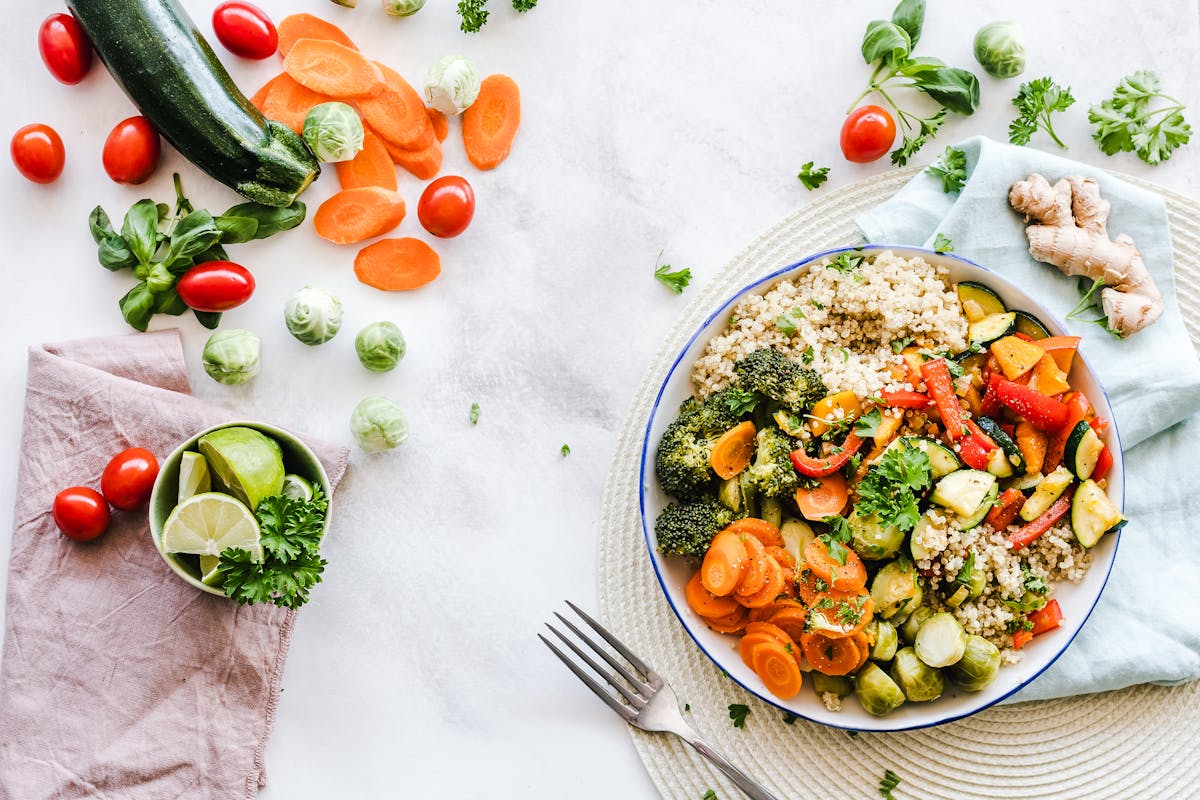
Ever stared at your plate wondering, "Is this balanced?" The USDA MyPlate method takes the guesswork out of it. It's simple: divide your plate into sections.
- ½ plate: vegetables and fruits (the more colorful, the better)
- ¼ plate: grains (preferably whole grains like brown rice or quinoa)
- ¼ plate: protein (chicken, fish, beans — whatever you like)
- Small amount: dairy or dairy alternatives (milk, yogurt, cheese)
Does this mean you have to measure everything? Absolutely not. Think of it as a visual guide, not a strict rule. The goal is to get a good mix of nutrients without stressing.
Breakfast Ideas
Breakfast doesn't have to be fancy. It just needs to keep you going until lunch. Here are some easy options:
- Oatmeal with milk, banana, and a spoonful of peanut butter — hits all the macros
- Greek yogurt with berries and granola — protein + fiber + healthy fats
- Scrambled eggs with whole grain toast and avocado — simple, satisfying, and packed with nutrients
Lunch Ideas
Lunch should keep you full through that 3 PM slump. Skip the sad desk salad and try these:
- Grilled chicken salad with mixed greens, veggies, and olive oil dressing — go heavy on the veggies, light on the croutons
- Turkey sandwich on whole grain bread with side salad — add mustard instead of mayo to save calories
- Lentil soup with whole grain roll and steamed vegetables — plant-based protein that keeps you full
Dinner Ideas
Dinner should be satisfying but not so heavy you can't sleep. Focus on lean protein and lots of veggies:
- Baked salmon with quinoa and roasted broccoli — omega-3s + complex carbs + fiber
- Lean beef stir-fry with brown rice and mixed vegetables — use a splash of soy sauce, not a whole bottle
- Vegetable curry with chickpeas and brown rice — flavorful and filling without the extra calories
Realistically, no one eats perfectly every day. Some days you'll grab a burger and fries. That's okay. The key is making balanced choices most of the time.
Understanding USDA Recommended Daily Allowances
The USDA publishes recommended daily allowances (RDAs) for macronutrients based on age, gender, and activity level. These are the minimum amounts most healthy people need to function. Keep in mind — they're guidelines, not hard rules.
| Age Group | Gender | Protein (g/day) | Carbs (g/day) | Fat (g/day) |
|---|---|---|---|---|
| 19-30 | Male | 56 | 130 | 44-78 |
| 19-30 | Female | 46 | 130 | 44-78 |
| 31-50 | Male | 56 | 130 | 44-78 |
| 31-50 | Female | 46 | 130 | 44-78 |
| 51+ | Male | 56 | 130 | 44-78 |
| 51+ | Female | 46 | 130 | 44-78 |
These are minimums, not targets. If you're active, you'll need more carbs and protein. If you're sedentary, you might need less. Pregnant women, athletes, and people with health conditions should adjust accordingly. Should you track every gram? Probably not — unless you're really trying to fine-tune your diet.
Institute of Medicine Recommendations
The Institute of Medicine (IOM) breaks down macronutrient ranges as percentages of daily calories. This is more helpful than fixed numbers because everyone's calorie needs are different.
- Carbohydrates: 45-65% of daily calories
- Protein: 10-35% of daily calories
- Fat: 20-35% of daily calories
For a 2000-calorie diet, that works out to:
- Carbohydrates: 225-325 grams
- Protein: 50-175 grams
- Fat: 44-78 grams
Notice how wide those ranges are? That's intentional. Your ideal intake depends on your activity level, goals, and body type. One size does not fit all.
Health Organization Perspectives on Calorie Intake
Every health organization seems to have their own take on nutrition. But here's the thing — they all agree on the basics. Let's cut through the jargon.
World Health Organization (WHO)
The WHO says focus on nutrient-dense foods, not just calorie numbers. A 500-calorie meal of veggies and lean protein is way better than 500 calories of candy. Makes sense, right?
American Heart Association (AHA)
The AHA is all about heart health. They say keep saturated fat below 7% of your daily calories and trans fats as low as possible. They also recommend 1.5 cups of fruit and 2 cups of veggies a day — minimum. Most Americans fall short here.
Academy of Nutrition and Dietetics
Dietitians know one thing better than anyone: everyone is different. They stress individualized plans based on your health status, preferences, and goals. What works for your friend might not work for you.
Does this mean you need a personal dietitian? Not necessarily. But it does mean you shouldn't follow every trend that pops up on social media. Do your research, and listen to your body.
User Feedback and Real-World Experiences
We've talked to hundreds of people who've tried calorie tracking. Here's what they actually say — not the polished quotes you see on social media.
What Works
- "Tracking showed me how many calories I was getting from mindless snacking. I'd grab a handful of chips here, a cookie there — and suddenly I was at 500 extra calories a day." — Sarah, 32, lost 20 lbs in 6 months
- "The Food Calorie Calculator helped me plan meals that actually keep me full. I used to eat salads for lunch and be starving by 3 PM. Now I add protein and healthy fats — game changer." — Mark, 45
- "I had no clue what a serving size actually looked like. Learning that a 'small' restaurant pasta is 3 servings? That alone helped me lose 10 lbs." — Emily, 28
The Real Struggles
- "Restaurants are brutal. I try to estimate, but who knows how much oil they use? I've learned to order grilled chicken and veggies — it's easier to guess." — David, 35
- "Weighing everything felt obsessive at first. But after a month, I can eyeball portions pretty well. You don't need to track forever — just long enough to learn." — Rachel, 29
- "I got so caught up in hitting exact numbers that I forgot to enjoy food. Now I track most days, but if I go out with friends? I don't even look at my app." — Mike, 41
Here's the bottom line: Tracking works if you use it as a tool, not a rulebook. Be kind to yourself — progress, not perfection.
Typical Meal Combinations for Different Goals
Here are sample meal plans for different calorie targets. Keep in mind — these are just examples. Adjust portions based on your activity level and hunger cues.
| Meal | 1500 Calorie Plan | 2000 Calorie Plan | 2500 Calorie Plan |
|---|---|---|---|
| Breakfast | 1 cup oatmeal + 1 banana + 1 cup skim milk + 1 tbsp peanut butter 429 cal | 18g protein | 69g carbs | 10g fat |
2 eggs scrambled + 2 slices whole wheat toast + 1 cup whole milk + 1 orange 475 cal | 27g protein | 50g carbs | 20g fat |
3 eggs omelet + 3 slices whole wheat toast + 1 cup whole milk + 1 banana 675 cal | 36g protein | 78g carbs | 26g fat |
| Lunch | 4 oz grilled chicken + 1 cup brown rice + 1 cup broccoli + 1 tsp olive oil 491 cal | 44g protein | 56g carbs | 8g fat |
6 oz grilled turkey + 1.5 cups quinoa + 1.5 cups mixed veggies + 1 tbsp olive
oil 715 cal | 61g protein | 75g carbs | 20g fat |
8 oz grilled chicken + 2 cups brown rice + 2 cups veggies + 1 whole wheat
roll 852 cal | 67g protein | 127g carbs | 7g fat |
| Dinner | 4 oz baked salmon + 1 medium potato + 1 cup green beans + 1 tsp butter 439 cal | 31g protein | 47g carbs | 16g fat |
6 oz lean beef + 1 cup mashed potatoes + 1.5 cups asparagus + 1 whole wheat
roll 630 cal | 47g protein | 61g carbs | 20g fat |
8 oz baked salmon + 1.5 cups sweet potato + 2 cups roasted veggies + 1 tbsp olive
oil 880 cal | 60g protein | 80g carbs | 40g fat |
| Daily Total | ~1,359 cal | 93g protein | ~1,820 cal | 135g protein | ~2,407 cal | 163g protein |
Notice how the protein stays high across all calorie levels? That's intentional. Protein keeps you full and preserves muscle mass. The carbs and fats adjust based on your energy needs.
Frequently Asked Questions
Are all calories really the same?
Technically, a calorie is a calorie. But here's what no one tells you: 100 calories from broccoli gives you fiber, vitamins, and minerals. 100 calories from soda? Just sugar and empty calories. Your body processes them differently. Nutrient density matters more than you think.
How accurate are food calorie databases?
USDA FoodData Central is the gold standard in the US. Values come from lab analysis of food samples. But here's the catch: individual foods vary. A tomato from your garden might have slightly different calories than one from the grocery store. Cooking methods change things too — roasted veggies concentrate calories by removing water. So take database numbers as a guide, not gospel.
Do I need to track calories every single day?
Absolutely not. Tracking for a week or two teaches you more about your eating habits than any diet book. Once you understand portion sizes and which foods are calorie-dense, you can estimate. Think of tracking as training wheels — you don't need them forever.
What's the best way to track calories when eating out?
Most chain restaurants post nutrition info online or on menus. For local spots, estimate. Choose grilled over fried, ask for dressing on the side, and remember — portions are usually 2-3 servings. Our Food Calorie Calculator has a restaurant estimate feature that helps.
Does cooking really change calorie content?
You bet. Cooking meat removes fat (good for lowering calories). Cooking veggies removes water (bad — it concentrates calories). A cup of raw spinach has ~7 calories; a cup of cooked spinach has ~41. Always check if a food is listed as raw or cooked in the database.
Common Mistakes in Calorie Tracking
We've all been there. You track your meals perfectly… but somehow you're not losing weight. Here are the mistakes even experienced trackers make.
Mistake 1: Forgetting Drinks
This is the #1 mistake. A 500ml soda has ~200 calories. A fancy coffee drink? 300-500 calories. Alcohol? A glass of wine is ~120 calories, a beer ~150. Drink two glasses of wine with dinner? That's 240 calories — almost a meal's worth. Always track your drinks.
Mistake 2: Underestimating Cooking Oils
One tablespoon of oil is 120 calories. That "splash" you put in the pan? Probably 2-3 tablespoons. Suddenly your healthy stir-fry is 240-360 calories higher than you thought. Use a spray oil or measure with a spoon — it makes a huge difference.
Mistake 3: Ignoring Condiments
Ranch dressing: 70 calories per tablespoon. Ketchup: 25 calories. Mayonnaise: 90 calories. These add up fast. A salad with 2 tablespoons of ranch adds 140 calories — before you even add croutons or cheese. Ask for dressing on the side, or use vinegar and oil instead.
Mistake 4: Not Accounting for Restaurant Portions
We mentioned this earlier, but it bears repeating. Restaurant portions are 2-3 servings. A "personal" pizza? 4-6 slices, each slice is a serving. If you eat the whole thing, you're at 1200+ calories. Split meals, take leftovers home, or order an appetizer as your main dish.
Actually, here's a trick: Take a photo of your meal before you eat. When you look at it later, you'll see just how much food you're consuming. It's eye-opening.
Practical Tips for Successful Calorie Tracking
Tracking doesn't have to be complicated. Here's how to make it work for you.
Start Simple
Don't track everything on day one. Start with your main meals — breakfast, lunch, dinner. After a few days, add snacks. Then drinks. Baby steps are better than burning out.
Use a Food Scale (But Don't Obsess)
A food scale is the most accurate way to measure portions. Digital scales are cheap and easy to use. But here's the thing — you don't need to weigh forever. After a month, you'll be able to estimate portions pretty well. Think of it as training, not punishment.
Plan Ahead
Meal planning makes tracking 10x easier. Spend 30 minutes on Sunday planning your meals for the week. Pre-log them in your tracker or use our Food Calorie Calculator. When you know what you're eating, you're less likely to make impulsive choices.
Be Consistent, Not Perfect
Realistically, you'll forget to track some days. You'll eat more than planned. You'll have a cheat meal. That's okay. The goal is to get a general sense of your intake, not to be 100% accurate every single day. Aim for 80% consistency — that's enough.
Focus on Progress, Not Perfection
Tracking is a tool, not a judgment. Use the information to make small, sustainable changes. Swap soda for water. Add an extra serving of veggies. Reduce your pasta portion by half. These small changes add up over time. Remember — losing 1-2 lbs a week is sustainable. Losing 10 lbs a week? That's a crash diet, and you'll gain it all back.
Here's the final thought: Nutrition is personal. What works for your friend might not work for you. Experiment, listen to your body, and find what feels sustainable. That's the key to long-term success.
Data Source and References
- [1] US Department of Agriculture. FoodData Central. fdc.nal.usda.gov
- [2] US Department of Agriculture and US Department of Health and Human Services. Dietary Guidelines for Americans, 2020-2025. dietaryguidelines.gov
- [3] Institute of Medicine. Dietary Reference Intakes for Energy, Carbohydrate, Fiber, Fat, Fatty Acids, Cholesterol, Protein, and Amino Acids. National Academies Press, 2005.
- [4] American Heart Association. Dietary Fats and Oils. heart.org